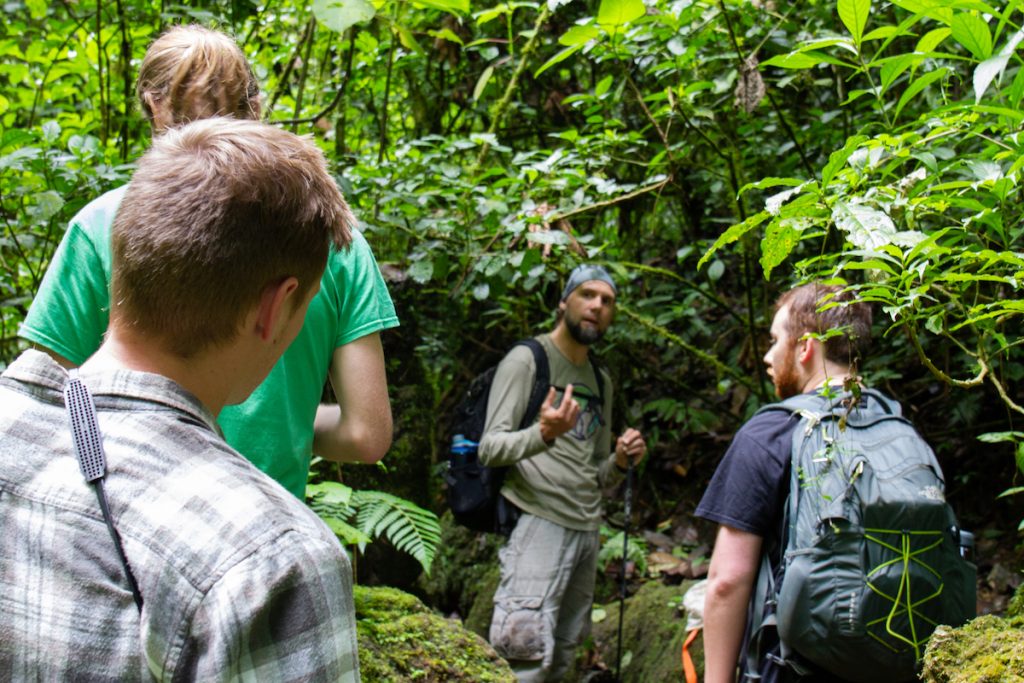
Since 2014, CCFC has been collaborating with Indigo Expeditions. Their work has focussed on assessing levels of amphibian and reptile diversity on our campus. To date they have identified 17 species of amphibians and 34 species of reptiles. Around 50% of the amphibian species are endangered and endemic to the region, as are many of the reptiles.
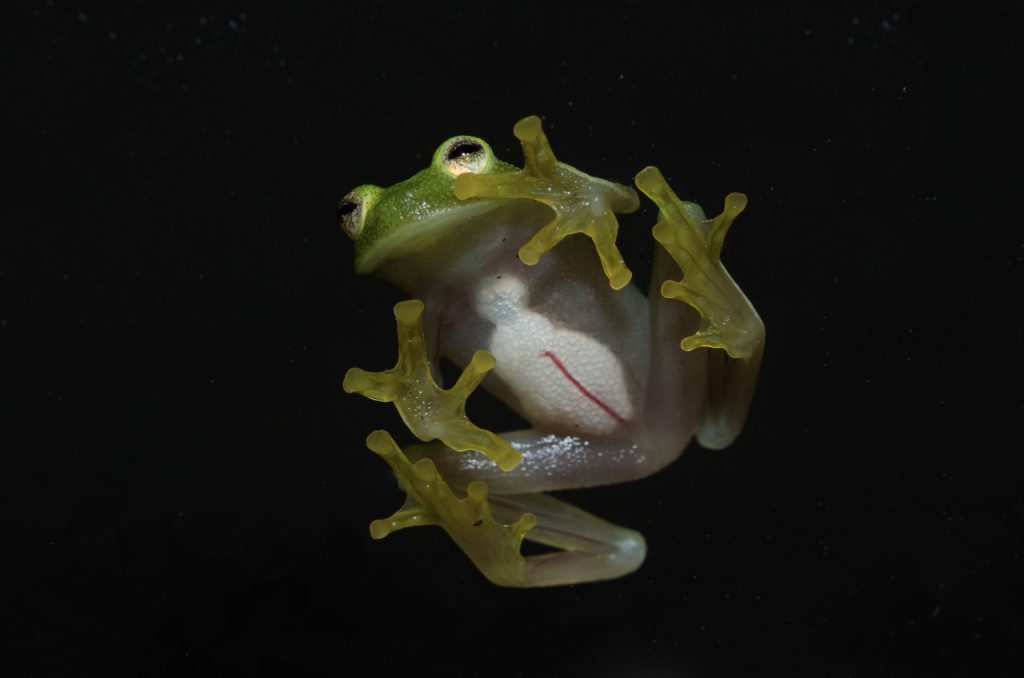
Over the next few years of Indigo’s continued work we expect the number of species encountered here to increase, for example in the first half of 2018 alone, five species of snake have been encountered here for the first time.
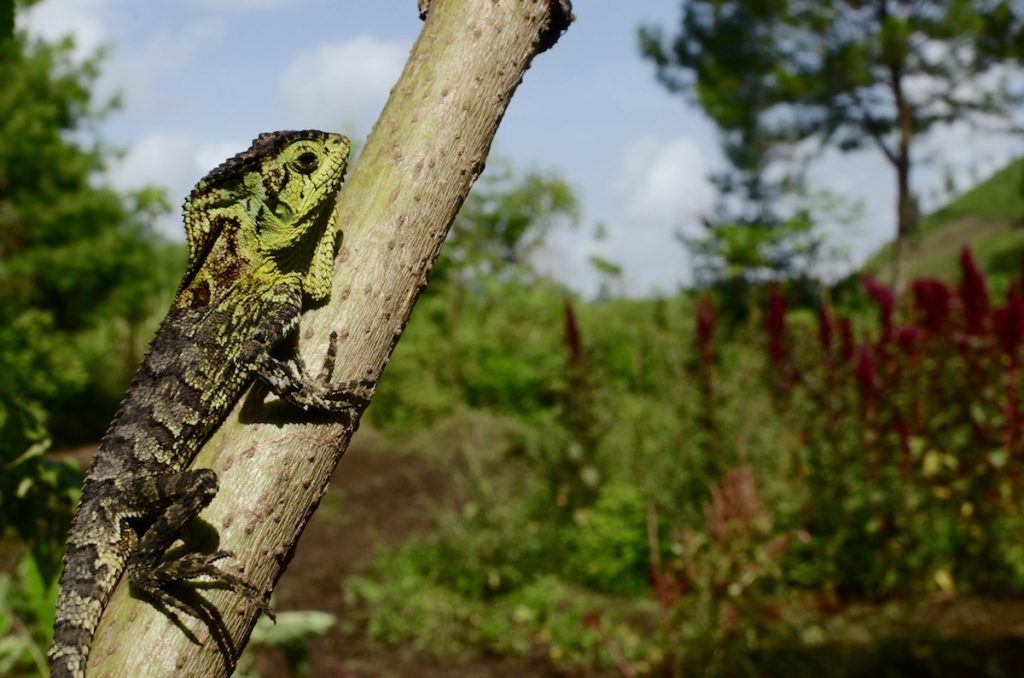
Keeled Helmeted Iguana (Corytophanes percarinatus)
The future work of Indigo Expeditions will focus on assessing how amphibians and reptiles are able to recolonize our agroecology and reforestry parcels (as seen above: this Keeled Helmeted Iguana was found in our Amaranth and Dalia garden). We are thrilled to maintain this long-term collaboration with Indigo, their work helps to inform our conservation work and always keeps us inspired.
Today we officially have completed the outer walls of the Big Quetzal. Our building crew is proud of a job well done, as we move fully into our final push to complete the second floor and interior walls in the last quarter of the building.
Guatemalan pottery, is as much a visual art form as it is an olfactory experience. The best tortillas are of black corn prepared over a clay kil, and served alongside a sek of spicy and smoky lol beans. The earthy taste from the bean pot and griddle are not easily replicated elsewhere. Whether the drink is kakaw, café, atol, o boj a fuller aroma is distinctive of being prepared in a kukb’. Worship and prayer carry the smell of incense and candle-smoke from mountain caves to the catedrál de Cobán. Even the rain fallen on the terra-cotta tiles of the townhouses or haciendas holds heartwarming memories.
In preparation for this project, I am seeking out these scent trails; gathering as many clues and tips on how to best guide the project when I get on the ground. Experiments in my own studio work, sketching maps of regional pottery styles, and researching deeper into the historical context I will be working in. Along the way I have encountered many brilliant minds, artists, professors and preachers. I look forward to working more closely with these people and with many others who I’ve not met yet.
CCFC, in partnership with the senior class of Liceo Javier de la Verapaz, San Juan Chamelco undertook a major reforestation project with the village schools of San Pablo Xucaneb, Coban. The village of San Pablo is located at the foot of the Xucaneb mountain. The Resplendent Quetzal, a near-threatened species and Guatemala’s national bird, can still be found in the cloud forests of the mountain. San Pablo Xucaneb is also high priority work area for CCFC programs such as Artful Eyes, Kids and Birds, and the scholarship program.
As a part of their senior project, 10 senior students from Liceo Javier made several visits to the village of Xucaneb. With guidance from CCFC, the students defined and mapped areas for reforestation. Students then met with village leaders and private landowners to agree upon a plan for reforestation. On July 6, CCFC provided 500 seedlings for the first installment in this project. Students from Liceo Javier worked with local students to plant target tree species.
When finished, this reforestation and stream bank restoration project will cover 8.629 acres. In terms of overall environmental impact, maybe it is a drop in the bucket, but it’s a start. This project is also another opportunity for CCFC to reach the teachers and the youth of this village and to advocate for the long-term appreciation and protection of the cloud forest.